
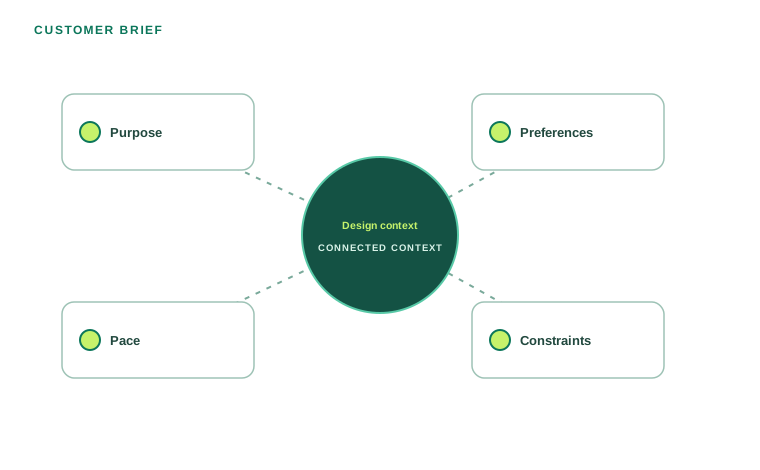
CUSTOMER BRIEF
Capture practical requirements and human expectations
A useful brief brings together practical constraints and experiential expectations. It may include:
- Travel purpose and the people traveling.
- Interests, priorities and experiences to avoid.
- Budget context and where the customer values investment.
- Preferred pace, activity level and travel style.
- Accommodation, transport and dining preferences.
- Health, dietary, accessibility or other special requirements.
- Emotional expectations such as privacy, celebration, discovery or reassurance.
The goal is not to collect every possible field. It is to understand what will materially shape the Trip.
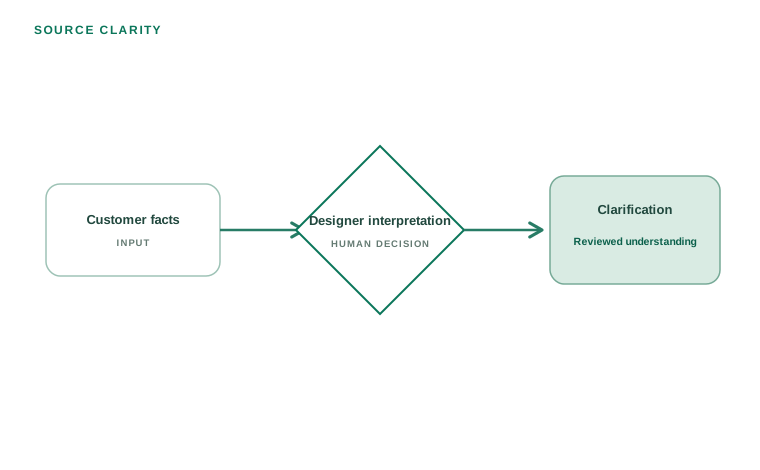
SOURCE CLARITY
Preserve the source of each conclusion
Customer-provided facts should not be mixed with a Designer's interpretation. A professional brief benefits from distinguishing what the customer said, what the Designer assessed and what still needs clarification.
If AI helps extract or summarize an enquiry, its inferences should remain labeled and reviewable.
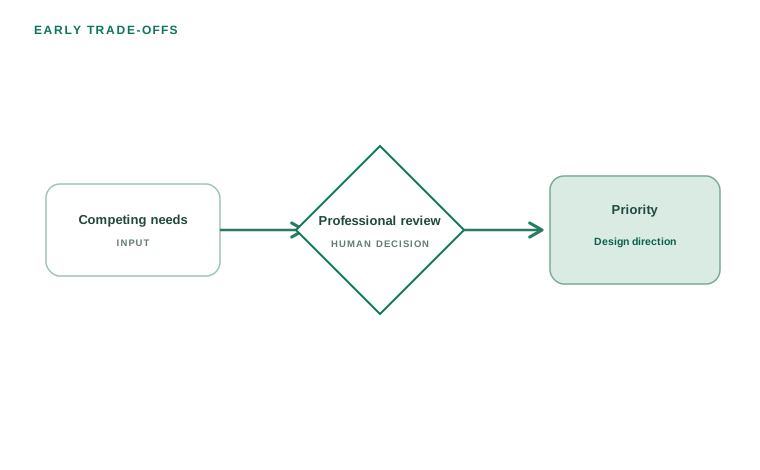
EARLY TRADE-OFFS
Identify tensions before building
Complex briefs often contain trade-offs: an ambitious activity list with a relaxed pace, a premium expectation with a constrained budget, or several travelers with different priorities.
Surfacing these tensions early gives the Designer an opportunity to clarify, prioritize and explain choices before detailed work begins.
DESIGN PRINCIPLES
Define what good looks like for this customer
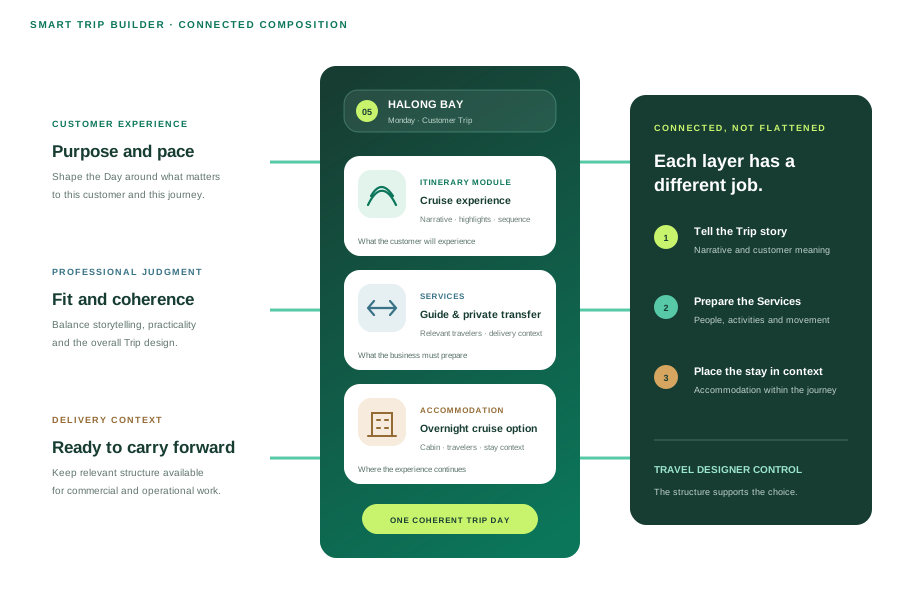
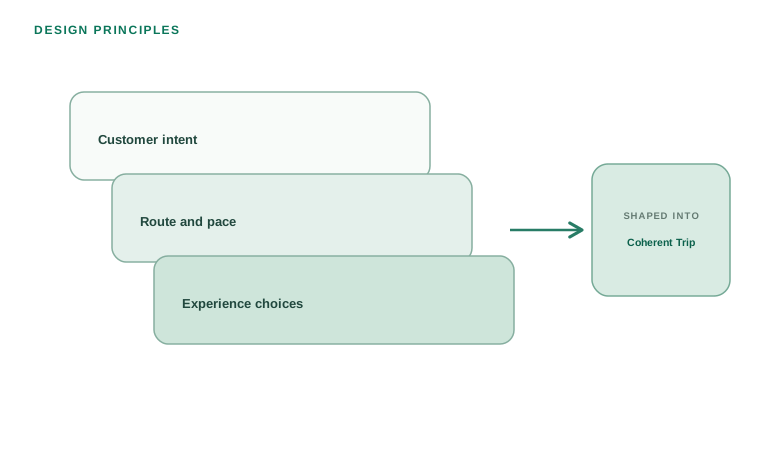
Before selecting Services, the Designer can articulate a small set of design principles for the Trip. For example: protect unhurried mornings, prioritize locally guided experiences, minimize hotel changes or create one memorable celebration moment.
These principles help the team review whether the eventual route, pace and components form a coherent experience.
HUMAN JUDGMENT
Use structure without reducing professional judgment
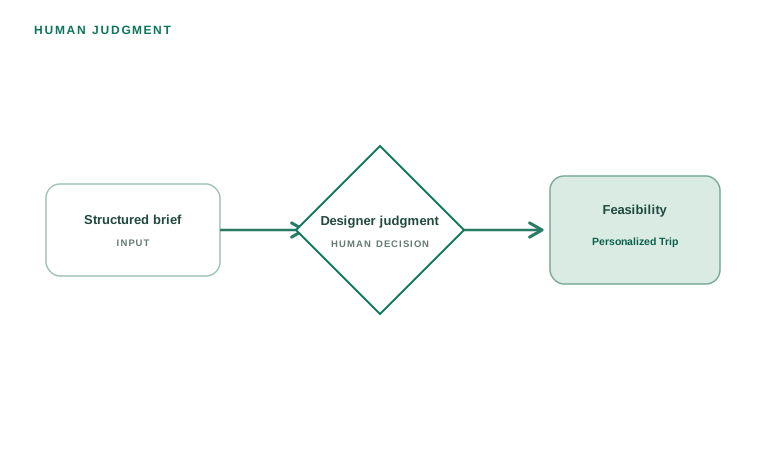
A structured brief makes important context easier to find and carry forward. It does not make the design automatic. Professional judgment is still required to decide what is suitable, distinctive and feasible.
BOOK A TRIPLY DEMO
A stronger business with Triply.
Bring a real workflow from your tailor-made travel business. We will focus the demo on where a more connected process can increase capacity, strengthen control and support profitable growth.
- Design
- Quote
- Book
- Reserve
- Operate
- Monitor
- 01
Share your operating context
Describe your business model, market and highest-priority workflow.
- 02
Define the focus
Trip Design, commercial preparation, delivery Operations or the connected lifecycle.
- 03
Evaluate the fit
Assess how Triply aligns with your team, operating model and growth priorities.